
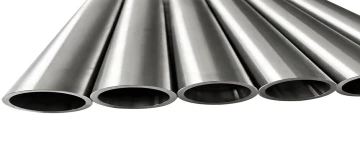
Characteristics of Tantalum Tube
Tantalum tube is a tubular material made of tantalum metal.
1. Characteristics
Corrosion resistance
Tantalum has extremely high corrosion resistance and is stable in many chemical substances. It can resist the erosion of various corrosive media such as acids, alkalis, and salts, and can also remain relatively stable in highly corrosive solutions such as aqua regia.
This characteristic makes tantalum tubes widely used in chemical, pharmaceutical and other fields, and can be used to transport corrosive liquids or gases.
High temperature stability
Tantalum tubes can maintain good performance in high temperature environments. It has a high melting point (about 2996℃) and is not easy to soften or deform at high temperatures.
This makes tantalum tubes suitable for applications in high temperature processes and high temperature environments, such as aerospace, electronics and other fields.
Good mechanical properties
Tantalum tubes have high strength and hardness, as well as certain toughness. It can withstand certain pressure and tension, and is not easy to break or damage.
In addition, tantalum tubes have good processing performance and can be made into tubes of different shapes and sizes through various processing methods.
2. Uses
Chemical industry
In the chemical industry, tantalum tubes are often used in equipment such as pipelines for corrosive media, reactor linings, and heat exchangers. For example, in the process of producing strong acids such as sulfuric acid, hydrochloric acid, and nitric acid, tantalum tubes can effectively prevent equipment from being corroded.
Electronic field
Due to the good conductivity and stability of tantalum, tantalum tubes are widely used in the electronics industry to manufacture electronic components such as capacitors, resistors, and transistors. In addition, tantalum tubes can also be used to make heat sinks and heat sinks for high-temperature electronic devices.
Medical field
In the medical field, tantalum tubes can be used to manufacture medical devices such as artificial joints and dental implants. Tantalum has good biocompatibility and will not cause rejection reactions in the human body, so it is suitable for medical devices that come into contact with the human body.
Aerospace field
The aerospace field has extremely high requirements for the performance of materials. The high temperature stability and corrosion resistance of tantalum tubes make it an important material in aerospace equipment. For example, tantalum tubes can be used to manufacture high-temperature components such as engine parts and rocket nozzles.
3. Production process
Powder metallurgy method
Powder metallurgy is one of the common methods for producing tantalum tubes. First, tantalum powder is made into tantalum billets through processes such as pressing and sintering, and then the tantalum billets are made into tubes through processing methods such as extrusion and stretching.
Powder metallurgy can produce tantalum tubes of various shapes and sizes, and can control the porosity and density of the tubes, thereby improving the performance of the tubes.
Electron beam melting method
Electron beam melting method is a method for producing high-purity tantalum tubes. The tantalum raw material is placed in an electron beam melting furnace, melted by high-temperature heating of the electron beam, and then cooled and solidified into a tantalum ingot under a vacuum environment. Finally, the tantalum ingot is made into a tube by processing methods such as extrusion and stretching.
Electron beam melting method can produce high-purity tantalum tubes, which are suitable for fields with extremely high requirements for material purity.
What are the applications of tantalum tubes in electronics, chemical industry and other fields?
Tantalum tubes have many important applications in electronics, chemical industry and other fields due to their high melting point, corrosion resistance and good processing performance:
Electronics field:
Capacitors: Tantalum has good conductivity and stability, and can form a stable anodic oxide film in an acidic electrolyte. Electrolytic capacitors made of tantalum have the advantages of large capacity, small size and good reliability, and are often used in circuit boards of electronic equipment such as mobile phones, computers and televisions.
Electron emission tubes and high-power electron tube parts: Tantalum can be used as a material for electron emission tubes and high-power electron tube parts, such as in some high-frequency and high-voltage electronic equipment.
Semiconductor manufacturing equipment: In the semiconductor manufacturing process, tantalum tubes can be used to manufacture some special parts, such as the lining of the reaction chamber, pipelines, etc., because they are resistant to high temperature, corrosion and will not pollute semiconductor materials, and can meet the high cleanliness requirements of semiconductor manufacturing.
Chemical industry:
Anti-corrosion equipment: Tantalum has excellent corrosion resistance to a variety of acids, alkalis and organic solvents, and can be used to manufacture anti-corrosion equipment such as reactors, distillation towers, heat exchangers, pipelines, etc. in chemical production. For example, in chemical companies that produce strong acids (such as sulfuric acid, hydrochloric acid), strong alkalis or organic solvents, equipment made of tantalum tubes can effectively resist corrosion and ensure safe and stable production.
Catalyst carrier: Tantalum tubes can be used as catalyst carriers to provide catalysts with a larger specific surface area and good stability, and promote chemical reactions. For example, in some petrochemical catalytic reactions, tantalum tube carriers can improve the efficiency and service life of catalysts.
Temperature measuring protection tube: In chemical production, it is often necessary to measure the temperature of high-temperature and corrosive media. Tantalum tubes can be used to make temperature measuring protection tubes for thermocouples due to their high temperature resistance and corrosion resistance to ensure the accuracy and stability of temperature measurement.
What factors affect the performance and application of tantalum tubes?
1. Material factors
Purity
The purity of tantalum tubes has a great influence on their performance. High-purity tantalum tubes have better corrosion resistance, conductivity and high-temperature stability. The presence of impurities may reduce the performance of tantalum tubes and even cause them to fail under certain circumstances.
For example, in the electronics field, high-purity tantalum tubes can provide more stable capacitance performance and lower leakage current. In the chemical industry, high-purity tantalum tubes can better resist the erosion of corrosive media.
Alloy composition
Tantalum can form alloys with other metals to improve its performance. Different alloy compositions will affect the mechanical properties, corrosion resistance and processing properties of tantalum tubes.
For example, tantalum-tungsten alloys have higher strength and hardness and are suitable for some applications with high mechanical performance requirements. Tantalum-niobium alloys have better corrosion resistance and can be used in more harsh corrosive environments.
2. Manufacturing process factors
Processing methods
The processing methods of tantalum tubes include extrusion, stretching, rolling, etc. Different processing methods will affect the microstructure and performance of tantalum tubes.
For example, extrusion processing can obtain a denser microstructure and improve the strength and corrosion resistance of tantalum tubes. And stretching processing can make tantalum tubes have better dimensional accuracy and surface quality.
Heat treatment
Appropriate heat treatment can improve the performance of tantalum tubes. Heat treatment can adjust the microstructure of tantalum tubes, eliminate residual stress, and improve their strength, toughness and corrosion resistance.
For example, annealing can eliminate the residual stress generated by tantalum tubes during processing and improve their plasticity and toughness. And quenching and tempering can improve the strength and hardness of tantalum tubes.
3. Environmental factors
Temperature
Temperature has a great influence on the performance of tantalum tubes. In high temperature environment, the strength and hardness of tantalum tubes will decrease, while their plasticity and toughness will increase. At the same time, high temperature will also accelerate the oxidation and corrosion of tantalum tubes.
For example, in the field of aerospace, tantalum tubes need to work in high temperature environments, so it is necessary to select tantalum tube materials with good high temperature performance and take appropriate protective measures.
Corrosive media
Tantalum tubes have different corrosion resistance in different corrosive media. Some highly corrosive media, such as aqua regia and hydrofluoric acid, will cause serious corrosion to tantalum tubes.
For example, in the chemical industry, it is necessary to select suitable tantalum tube materials according to the specific corrosive media, and take corresponding anti-corrosion measures, such as coating, lining, etc.
Pressure
Pressure will also affect the performance of tantalum tubes. Under high pressure environment, the strength and sealing of tantalum tubes are required to be higher.
For example, in the field of petrochemicals, tantalum tubes need to withstand high-pressure corrosive media, so it is necessary to select tantalum tube materials with high strength and good sealing, and conduct strict pressure tests.
IV. Application factors
Design requirements
Different application occasions have different design requirements for tantalum tubes. For example, in the field of electronics, the dimensional accuracy and surface quality requirements of tantalum tubes are high, while in the field of chemical industry, the corrosion resistance and sealing requirements of tantalum tubes are higher.
Therefore, when designing tantalum tubes, it is necessary to select appropriate materials, processing methods and size specifications according to specific application requirements.
Installation and use conditions
The installation and use conditions of tantalum tubes will also affect their performance and life. For example, during the installation process, the tantalum tube needs to be protected from mechanical damage and corrosion. During use, the tantalum tube needs to be protected from excessive temperature, pressure and corrosive media.
At the same time, the tantalum tube needs to be inspected and maintained regularly to detect and deal with problems in a timely manner to ensure its performance and life.
In short, as a high-performance metal material, tantalum tubes have broad application prospects. With the continuous advancement of science and technology, the performance requirements for tantalum tubes will continue to increase, and the production process and application fields of tantalum tubes will continue to expand in the future.
Tantalum tube is a tubular material made of tantalum metal.
1. Characteristics
Corrosion resistance
Tantalum has extremely high corrosion resistance and is stable in many chemical substances. It can resist the erosion of various corrosive media such as acids, alkalis, and salts, and can also remain relatively stable in highly corrosive solutions such as aqua regia.
This characteristic makes tantalum tubes widely used in chemical, pharmaceutical and other fields, and can be used to transport corrosive liquids or gases.
High temperature stability
Tantalum tubes can maintain good performance in high temperature environments. It has a high melting point (about 2996℃) and is not easy to soften or deform at high temperatures.
This makes tantalum tubes suitable for applications in high temperature processes and high temperature environments, such as aerospace, electronics and other fields.
Good mechanical properties
Tantalum tubes have high strength and hardness, as well as certain toughness. It can withstand certain pressure and tension, and is not easy to break or damage.
In addition, tantalum tubes have good processing performance and can be made into tubes of different shapes and sizes through various processing methods.
2. Uses
Chemical industry
In the chemical industry, tantalum tubes are often used in equipment such as pipelines for corrosive media, reactor linings, and heat exchangers. For example, in the process of producing strong acids such as sulfuric acid, hydrochloric acid, and nitric acid, tantalum tubes can effectively prevent equipment from being corroded.
Electronic field
Due to the good conductivity and stability of tantalum, tantalum tubes are widely used in the electronics industry to manufacture electronic components such as capacitors, resistors, and transistors. In addition, tantalum tubes can also be used to make heat sinks and heat sinks for high-temperature electronic devices.
Medical field
In the medical field, tantalum tubes can be used to manufacture medical devices such as artificial joints and dental implants. Tantalum has good biocompatibility and will not cause rejection reactions in the human body, so it is suitable for medical devices that come into contact with the human body.
Aerospace field
The aerospace field has extremely high requirements for the performance of materials. The high temperature stability and corrosion resistance of tantalum tubes make it an important material in aerospace equipment. For example, tantalum tubes can be used to manufacture high-temperature components such as engine parts and rocket nozzles.
3. Production process
Powder metallurgy method
Powder metallurgy is one of the common methods for producing tantalum tubes. First, tantalum powder is made into tantalum billets through processes such as pressing and sintering, and then the tantalum billets are made into tubes through processing methods such as extrusion and stretching.
Powder metallurgy can produce tantalum tubes of various shapes and sizes, and can control the porosity and density of the tubes, thereby improving the performance of the tubes.
Electron beam melting method
Electron beam melting method is a method for producing high-purity tantalum tubes. The tantalum raw material is placed in an electron beam melting furnace, melted by high-temperature heating of the electron beam, and then cooled and solidified into a tantalum ingot under a vacuum environment. Finally, the tantalum ingot is made into a tube by processing methods such as extrusion and stretching.
Electron beam melting method can produce high-purity tantalum tubes, which are suitable for fields with extremely high requirements for material purity.
What are the applications of tantalum tubes in electronics, chemical industry and other fields?
Tantalum tubes have many important applications in electronics, chemical industry and other fields due to their high melting point, corrosion resistance and good processing performance:
Electronics field:
Capacitors: Tantalum has good conductivity and stability, and can form a stable anodic oxide film in an acidic electrolyte. Electrolytic capacitors made of tantalum have the advantages of large capacity, small size and good reliability, and are often used in circuit boards of electronic equipment such as mobile phones, computers and televisions.
Electron emission tubes and high-power electron tube parts: Tantalum can be used as a material for electron emission tubes and high-power electron tube parts, such as in some high-frequency and high-voltage electronic equipment.
Semiconductor manufacturing equipment: In the semiconductor manufacturing process, tantalum tubes can be used to manufacture some special parts, such as the lining of the reaction chamber, pipelines, etc., because they are resistant to high temperature, corrosion and will not pollute semiconductor materials, and can meet the high cleanliness requirements of semiconductor manufacturing.
Chemical industry:
Anti-corrosion equipment: Tantalum has excellent corrosion resistance to a variety of acids, alkalis and organic solvents, and can be used to manufacture anti-corrosion equipment such as reactors, distillation towers, heat exchangers, pipelines, etc. in chemical production. For example, in chemical companies that produce strong acids (such as sulfuric acid, hydrochloric acid), strong alkalis or organic solvents, equipment made of tantalum tubes can effectively resist corrosion and ensure safe and stable production.
Catalyst carrier: Tantalum tubes can be used as catalyst carriers to provide catalysts with a larger specific surface area and good stability, and promote chemical reactions. For example, in some petrochemical catalytic reactions, tantalum tube carriers can improve the efficiency and service life of catalysts.
Temperature measuring protection tube: In chemical production, it is often necessary to measure the temperature of high-temperature and corrosive media. Tantalum tubes can be used to make temperature measuring protection tubes for thermocouples due to their high temperature resistance and corrosion resistance to ensure the accuracy and stability of temperature measurement.
What factors affect the performance and application of tantalum tubes?
1. Material factors
Purity
The purity of tantalum tubes has a great influence on their performance. High-purity tantalum tubes have better corrosion resistance, conductivity and high-temperature stability. The presence of impurities may reduce the performance of tantalum tubes and even cause them to fail under certain circumstances.
For example, in the electronics field, high-purity tantalum tubes can provide more stable capacitance performance and lower leakage current. In the chemical industry, high-purity tantalum tubes can better resist the erosion of corrosive media.
Alloy composition
Tantalum can form alloys with other metals to improve its performance. Different alloy compositions will affect the mechanical properties, corrosion resistance and processing properties of tantalum tubes.
For example, tantalum-tungsten alloys have higher strength and hardness and are suitable for some applications with high mechanical performance requirements. Tantalum-niobium alloys have better corrosion resistance and can be used in more harsh corrosive environments.
2. Manufacturing process factors
Processing methods
The processing methods of tantalum tubes include extrusion, stretching, rolling, etc. Different processing methods will affect the microstructure and performance of tantalum tubes.
For example, extrusion processing can obtain a denser microstructure and improve the strength and corrosion resistance of tantalum tubes. And stretching processing can make tantalum tubes have better dimensional accuracy and surface quality.
Heat treatment
Appropriate heat treatment can improve the performance of tantalum tubes. Heat treatment can adjust the microstructure of tantalum tubes, eliminate residual stress, and improve their strength, toughness and corrosion resistance.
For example, annealing can eliminate the residual stress generated by tantalum tubes during processing and improve their plasticity and toughness. And quenching and tempering can improve the strength and hardness of tantalum tubes.
3. Environmental factors
Temperature
Temperature has a great influence on the performance of tantalum tubes. In high temperature environment, the strength and hardness of tantalum tubes will decrease, while their plasticity and toughness will increase. At the same time, high temperature will also accelerate the oxidation and corrosion of tantalum tubes.
For example, in the field of aerospace, tantalum tubes need to work in high temperature environments, so it is necessary to select tantalum tube materials with good high temperature performance and take appropriate protective measures.
Corrosive media
Tantalum tubes have different corrosion resistance in different corrosive media. Some highly corrosive media, such as aqua regia and hydrofluoric acid, will cause serious corrosion to tantalum tubes.
For example, in the chemical industry, it is necessary to select suitable tantalum tube materials according to the specific corrosive media, and take corresponding anti-corrosion measures, such as coating, lining, etc.
Pressure
Pressure will also affect the performance of tantalum tubes. Under high pressure environment, the strength and sealing of tantalum tubes are required to be higher.
For example, in the field of petrochemicals, tantalum tubes need to withstand high-pressure corrosive media, so it is necessary to select tantalum tube materials with high strength and good sealing, and conduct strict pressure tests.
IV. Application factors
Design requirements
Different application occasions have different design requirements for tantalum tubes. For example, in the field of electronics, the dimensional accuracy and surface quality requirements of tantalum tubes are high, while in the field of chemical industry, the corrosion resistance and sealing requirements of tantalum tubes are higher.
Therefore, when designing tantalum tubes, it is necessary to select appropriate materials, processing methods and size specifications according to specific application requirements.
Installation and use conditions
The installation and use conditions of tantalum tubes will also affect their performance and life. For example, during the installation process, the tantalum tube needs to be protected from mechanical damage and corrosion. During use, the tantalum tube needs to be protected from excessive temperature, pressure and corrosive media.
At the same time, the tantalum tube needs to be inspected and maintained regularly to detect and deal with problems in a timely manner to ensure its performance and life.
In short, as a high-performance metal material, tantalum tubes have broad application prospects. With the continuous advancement of science and technology, the performance requirements for tantalum tubes will continue to increase, and the production process and application fields of tantalum tubes will continue to expand in the future.